
Fisheries and Aquaculture Innovation Center (FAIC)
Creating Infrastructure and Supply
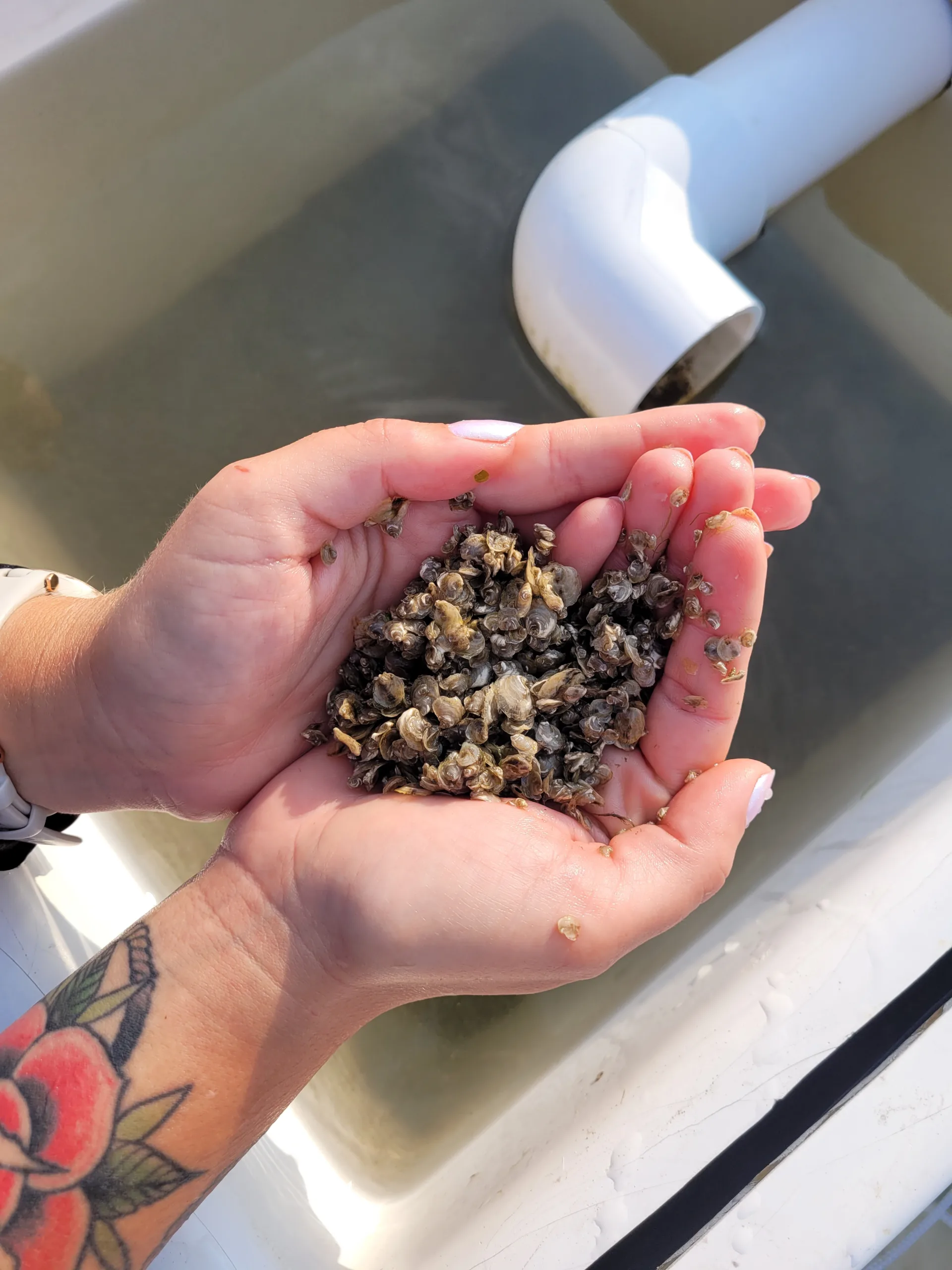
Critical bottlenecks to the aquaculture industry and restoration practitioners alike include the lack of critical infrastructure, as well as the lack of supply of oyster shell, larvae, and individual oyster seed. In response to these challenges, the University of Delaware constructed a pilot-scale oyster hatchery at the Lewes campus. The hatchery is intended to serve the local aquaculture industry and nonprofits conducting restoration work in the form of living shorelines and oyster reefs.
Phase 1
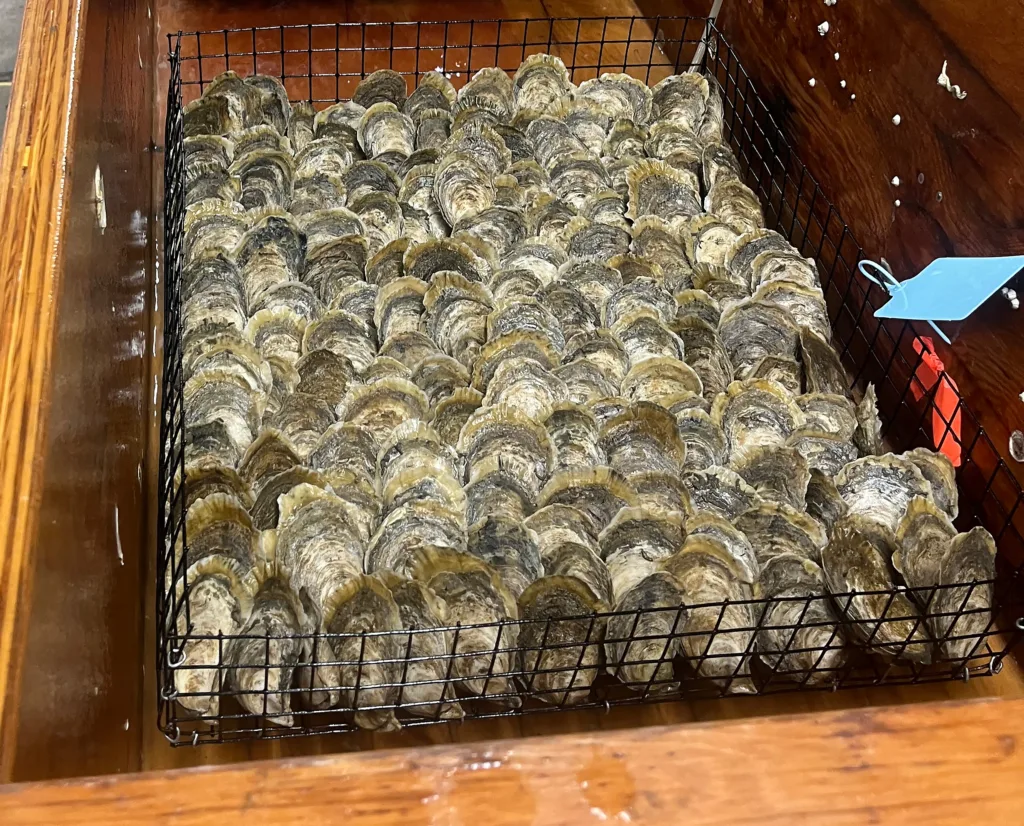
In just two years of operation, the pilot hatchery has supplied over 1,000,000 seed oysters and 500,000 spat on shell to Delaware’s commercial shellfish growers. The pilot hatchery aims to supply 1 million seed oysters to Inland Bays growers per year. As we begin our third year in production, we started experimenting with culturing hard clams based on the industries interests.
This pilot-scale hatchery serves as Phase I of the Fisheries and Aquaculture Innovation Center (FAIC) project, which will have a bigger ecological and economic impact on Delaware.
Phase 2
Shellfish Hatchery Expansion of the Fisheries & Aquaculture Innovation Center
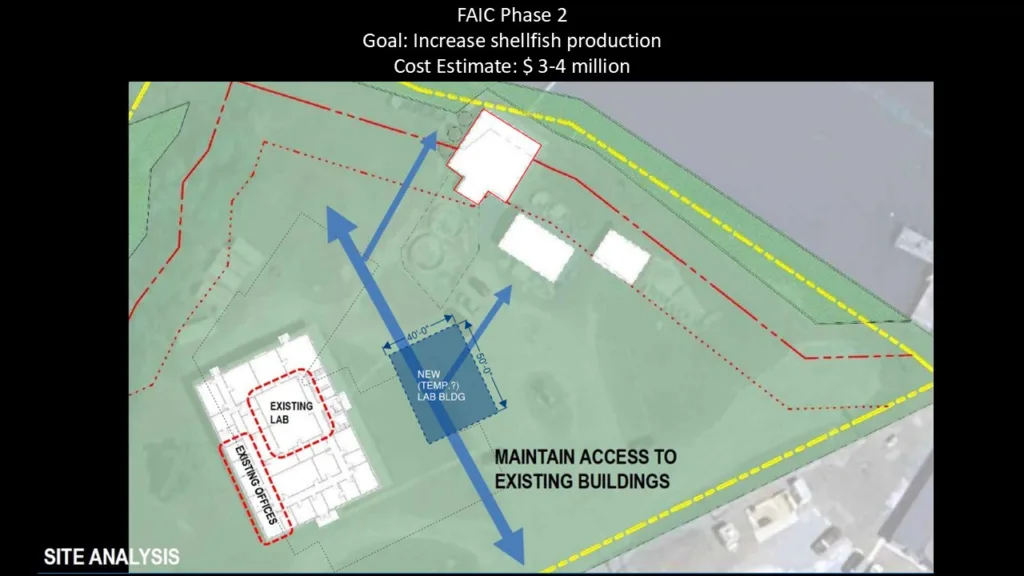
– Plan to expand pilot scale shellfish hatchery to a larger scale operation to increase production and serve more communities
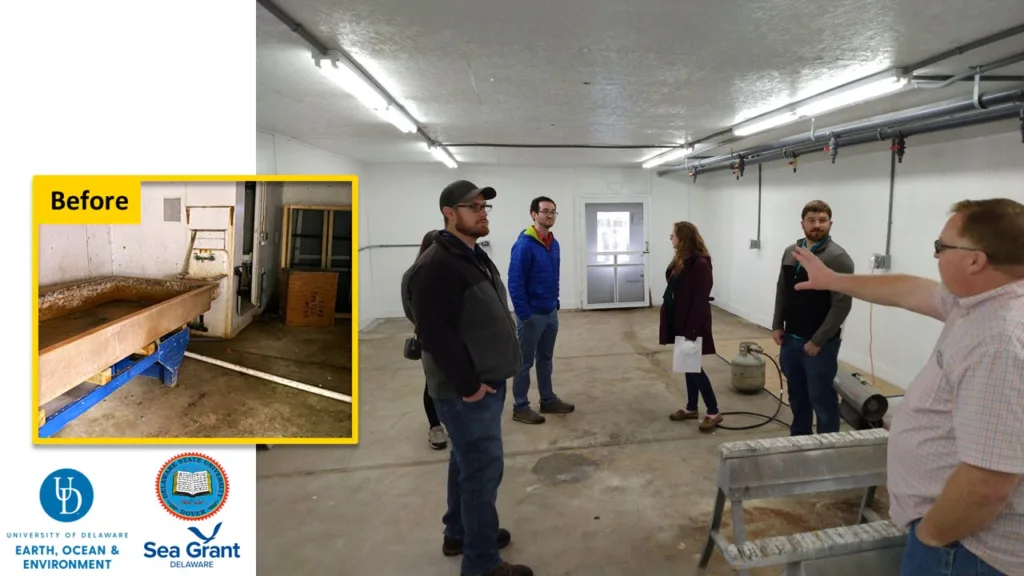
– More than $3 million (mostly state funding) to renovate our pilot hatchery space, operate our pilot hatchery, and plan for a larger hatchery and aquaculture development center while creating a workforce development program
– We want to build a larger hatchery to provide more oysters and explore new species (e.g. clams)
– We need to continue to fund operational expenses so we can retain technical knowledge
Phase 3
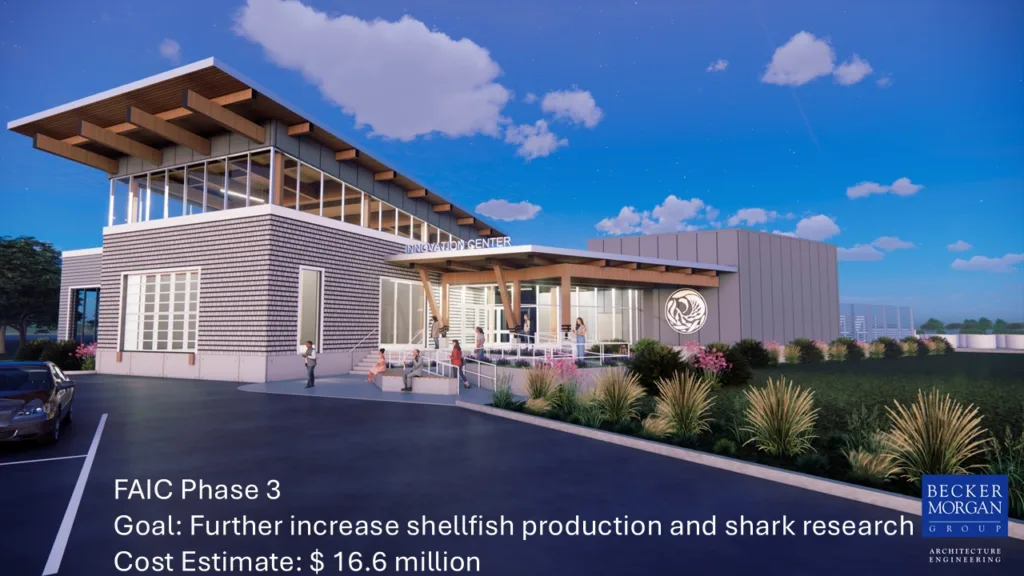
Increased shellfish production and crop diversification – Estimated $16.6 million
-Our phase 3 expansion is designed to yet again grow our shellfish production capacity, but also provide cooperative research space to work alongside commercial and non-profit partners
-This phase will included the creation of a new, publicly viewable space for apex predator research including resident species like Sandbar sharks
-Additionally, we seek the ability to diversify the growth methodologies and species including a potential expansion into new shellfish species like Bay Scallops and macroalgae
Phase 4
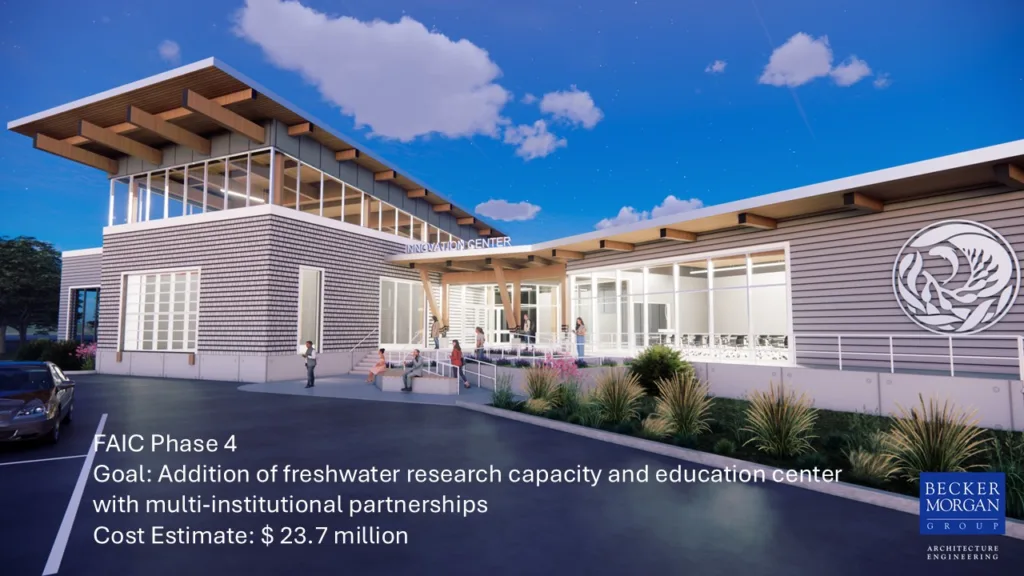
FAIC expansion & partnership for broader research impacts, and teaching– Estimated $23.7 million
-Our goal with Phase 4 is to create a multi-institutional partnership with other state based research agencies, such that we can expand the production of aquaculture species into other taxonomic groups like Atlantic Salmon
-Additionally, our Phase 4 plan will allow us to create a unique instructional space to serve as a formal classroom for new undergraduate and graduate students at multiple academic institutions increasing the potential for idea sharing
Help our cause
Make a Difference Where Land Meets Sea.
Donating to The DECO is a powerful way to protect the places you love. Your efforts and donations help preserve fragile ecosystems, support wildlife, and combat climate change. Join us and be part of a hands-on movement to ensure our coasts remain vibrant and resilient for generations to come.